Every UPSC topper once started as a beginner.
What separates successful candidates from struggling aspirants is not luck or intelligence alone. It is the strength of their foundation. UPSC preparation is a long journey that demands conceptual clarity, analytical ability, discipline, consistency, and strategic preparation.
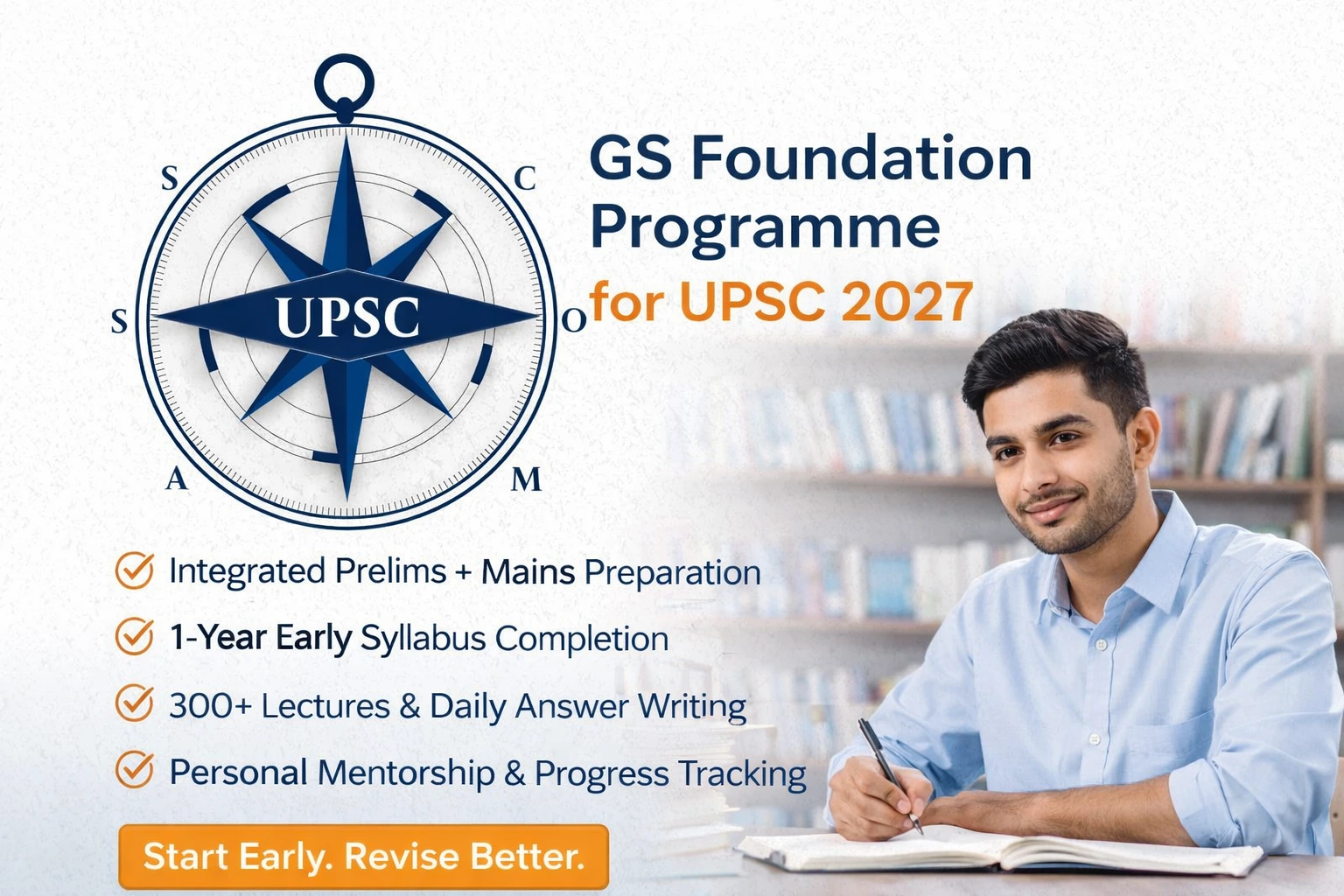
Without a strong foundation, aspirants often feel lost in the vast syllabus and eventually struggle with revision, answer writing, and consistency. This is why a well-structured GS Foundation Programme becomes extremely important. The GS Foundation Programme 2027 is designed to help aspirants build a complete preparation ecosystem from the beginning itself.
It combines:
- Integrated Prelims + Mains preparation
- Conceptual clarity
- Daily answer writing
- Skill development
- Current affairs integration
- Testing and mentorship
The goal is not just syllabus completion. The goal is long-term UPSC preparation success.
Why Foundation Matters in UPSC Preparation
Many aspirants begin preparation without direction. They:
- Collect too many resources
- Watch random lectures
- Follow inconsistent schedules
- Ignore answer writing
- Delay revision
- Separate Prelims and Mains preparation
This fragmented approach creates confusion and burnout. A foundation programme provides structure.
It helps aspirants:
- Understand the syllabus properly
- Build conceptual clarity
- Develop discipline
- Learn answer writing early
- Integrate current affairs effectively
- Follow a strategic roadmap
Strong foundations reduce preparation chaos.
Integrated Prelims + Mains Preparation
One of the biggest mistakes aspirants make is preparing for Prelims and Mains separately. UPSC is not two different examinations. Concepts studied for Prelims form the analytical base for Mains. The GS Foundation Programme follows an integrated preparation model. Aspirants learn:
- Concept building for Prelims
- Analytical understanding for Mains
- Perspective building for Interview
- Current affairs integration
- Multi-dimensional thinking
This saves time and improves retention.
The “Mains-First” Approach
Most aspirants start answer writing very late. As a result, they struggle with:
- Poor writing speed
- Weak structure
- Low confidence
- Inability to complete papers
- Lack of analytical thinking
The GS Foundation Programme follows a “Mains-First” approach. This means answer writing begins from Day 1.
Daily writing practice helps aspirants develop:
- Writing discipline
- Clarity of thought
- Structured presentation
- Analytical ability
- Time management
Answer writing gradually becomes a habit rather than a burden.
Building UPSC Answer Writing Skills from Scratch
Beginners often fear answer writing because they think they need complete knowledge before writing.
This is a misconception. Answer writing is a skill. And skills improve through practice. The programme trains aspirants from basics. Students learn:
- How to understand questions
- How to structure answers
- Introduction-body-conclusion framework
- How to use diagrams and flowcharts
- How to add value to answers
- How to improve presentation
This gradual process builds confidence.
Importance of Conceptual Clarity
UPSC increasingly focuses on analytical and application-based questions. Rote learning is no longer enough.
Aspirants need deep conceptual understanding. The GS Foundation Programme emphasizes:
- Subject interlinking
- Concept-based learning
- Current affairs integration
- Multi-dimensional analysis
- Real-world understanding
Strong concepts improve both Prelims accuracy and Mains answer quality.
Current Affairs with Perspective Building
Current affairs is one of the most confusing areas for aspirants. Many students consume excessive information without understanding relevance. The programme trains aspirants to:
- Connect current affairs with static syllabus
- Build analytical perspective
- Use current examples in answers
- Improve essay and ethics content
This creates balanced and mature understanding.
Skill-Based UPSC Preparation
UPSC preparation requires multiple skills beyond reading. The programme focuses on:
- Logical MCQ elimination
- Answer writing
- Analytical thinking
- Time management
- Revision planning
- Retention techniques
These practical skills improve performance significantly.
Why Testing and Evaluation Matter
Many aspirants study continuously without assessing performance. This leads to repeated mistakes.
The GS Foundation Programme includes:
- Weekly tests
- Answer writing practice
- Teacher evaluation
- Performance tracking
- Mistake analysis
Testing helps aspirants identify weaknesses and improve continuously.
Long-Term Mentorship and Guidance
UPSC preparation often becomes emotionally exhausting. Aspirants face:
- Burnout
- Self-doubt
- Lack of consistency
- Motivation loss
- Confusion regarding strategy
Mentorship helps aspirants remain disciplined and focused. Long-term guidance provides:
- Accountability
- Strategic clarity
- Preparation monitoring
- Doubt resolution
- Emotional support
This improves consistency over long preparation cycles.
Early Syllabus Completion Advantage
One major advantage of structured preparation is early syllabus completion. This gives aspirants more time for:
- Revision
- Testing
- Answer writing
- Current affairs integration
- Improvement strategies
Revision and practice are what separate average aspirants from top performers.
Who Should Join a GS Foundation Programme?
The programme is ideal for:
College Students
Students who want to complete the syllabus during graduation.
Beginners
Aspirants starting preparation from scratch.
Working Professionals
Candidates looking for structured long-term preparation.
Serious Aspirants
Students seeking integrated Prelims + Mains preparation.
Final Thoughts
UPSC preparation is not about studying endlessly. It is about preparing systematically. A strong foundation helps aspirants:
- Build conceptual clarity
- Improve answer writing
- Develop analytical thinking
- Maintain consistency
- Avoid burnout
- Improve performance continuously
The GS Foundation Programme 2027 creates a complete preparation ecosystem where aspirants develop the structure, skills, and strategy required for long-term UPSC success.Because a strong foundation today can create a rank tomorrow.