Context of the Visit
-
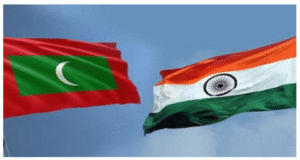
In 2025, Prime Minister Narendra Modi paid an official visit to the Maldives.
-
A total of 8 significant bilateral agreements were signed during this visit.
-
This visit aimed to reset and revitalise bilateral ties after a period of political unease under the “India Out” narrative.
-
It reinforced India’s commitment to being Maldives’ trusted neighbour and development partner.
Why Maldives Matters to India
-
Geographical proximity in the Indian Ocean makes it key to India’s maritime security.
-
Part of India’s Neighbourhood First Policy and SAGAR (Security and Growth for All in the Region) initiative.
-
Acts as a strategic outpost near vital shipping lanes that India seeks to protect.
-
Shares strong cultural, ethnic, linguistic, and religious ties with India.
-
Maldives is also part of India’s “First Responder” outreach in regional crises.
Key Agreements Signed in 2025
-
Debt Relief
-
-
India agreed to cut Maldives’ annual repayment burden by 40%, easing its financial stress.
-
-
₹4,850 crore Line of Credit
-
-
India extended this amount to support infrastructure, connectivity, and development goals of Maldives.
-
-
UPI and RuPay Integration
-
-
First time Indian fintech platforms will be operational in Maldives.
-
Promotes digital transactions, financial inclusion, and local currency trade.
-
-
Fisheries Cooperation
-
-
Vital sector for Maldives’ economy and livelihoods.
-
India and Maldives will collaborate on sustainable fishing, marine research, and trade access.
-
-
Housing Development
-
-
India handed over 3,300 affordable housing units in Hulhumalé as part of social welfare programs.
-
-
Security Assistance
-
-
India gifted 72 vehicles, equipment, and defence gear to strengthen Maldives’ internal security capacity.
-
-
Climate and Disaster Resilience
-
-
Focus on green energy, early warning systems, and joint preparedness for natural disasters.
-
-
Investment and Trade Cooperation
-
-
Agreed to speed up discussions on Free Trade Agreement (FTA) and a Bilateral Investment Treaty (BIT).
-
Strategic Significance of the Visit
-
Reversed the earlier “India Out” sentiment that had portrayed Indian presence as intrusive.
-
Reaffirmed India’s role as a reliable development and security partner.
-
Boosted India’s presence in the Indian Ocean Region (IOR) amid growing Chinese influence.
-
Focused on people-first development, such as housing, education, and healthcare.
Historical Foundation of Ties
-
India recognised Maldives’ independence first in 1965.
-
In 1988, India helped defeat a coup attempt via Operation Cactus, earning long-term goodwill.
-
Provided timely help during:
-
2004 tsunami relief,
-
2014 Malé water crisis,
-
COVID-19 pandemic (vaccines, food, medicines).
-
-
These humanitarian efforts have cemented India’s image as Maldives’ first responder.
Major Areas of Cooperation
-
Defence and Security
-
Joint exercises:
-
Ekuverin (Army),
-
Dosti (Coast Guard),
-
Ekatha (Defence capacity building).
-
-
Key projects supported by India:
-
MNDF Training Academy,
-
UTF Harbour,
-
Coastal Surveillance Radar System.
-
-
India has helped train over 1,500 officers of Maldives National Defence Force (MNDF).
-
India supports maritime patrols, medevac (emergency airlifts), and disaster response operations.
-
Development and Infrastructure
-
Flagship projects:
-
Greater Malé Connectivity Project,
-
Hanimaadhoo Airport,
-
IGMH Hospital upgrade,
-
MIFCO Cold Storage facilities.
-
-
47 High Impact Community Development Projects (HICDPs) completed across Maldives.
-
Focus on decentralised and inclusive development.
-
Trade and Investment
-
India was Maldives’ largest trading partner in 2023.
-
Bilateral trade reached $548 million in 2023.
-
Major Indian exports: Food, medicines, building materials.
-
Imports from Maldives: Seafood, scrap metal.
-
UPI and RuPay to boost real-time digital financial exchange.
-
Tourism and Culture
-
India was top tourist source country from 2021 to 2023.
-
Over 2 lakh Indian tourists visit annually.
-
Open skies agreement to enhance air connectivity.
-
Film shooting, yoga events, and cultural exchanges promoted mutual understanding.
-
Education and Human Resource Development
-
Indian scholarships (ICCR, ITEC) provide Maldivian students access to higher education.
-
Teacher training, technical education, and ICT development supported by India.
-
India assisted in building Police Training Academy, technical institutes, and digital infrastructure in Malé.
Challenges in the Relationship
-
“India Out” Campaign
-
A nationalist movement under President Muizzu earlier labelled India’s presence as a threat to sovereignty.
-
Created temporary distrust among the public and political groups.
-
Growing Chinese Influence
-
Maldives has increasing Chinese debt from Belt and Road Initiative (BRI) projects.
-
Risk of Maldives drifting into China’s strategic orbit, similar to Sri Lanka’s Hambantota port issue.
-
Sovereignty Sensitivities
-
Indian-funded defence facilities and military personnel are sometimes seen as interference by opposition parties.
-
Political Instability in Maldives
-
Frequent government changes and coalition politics lead to foreign policy swings.
-
Strains continuity in bilateral relations.
-
Project Execution Delays
-
Delays due to administrative bottlenecks, local opposition, and political interference.
-
Affects India’s credibility and image on the ground.
Way Forward
-
Ensure timely execution of all Indian-funded projects.
-
Establish institutional mechanisms for regular dialogue on security, trade, and technology.
-
Deepen cooperation in blue economy, marine biodiversity, and clean energy.
-
Expand youth, educational, civil society, and religious exchanges to strengthen public trust.
-
Align Maldives with India’s Indo-Pacific strategy for regional peace, rule of law, and economic stability.
-
Focus on transparent development finance to counter Chinese-style debt diplomacy.