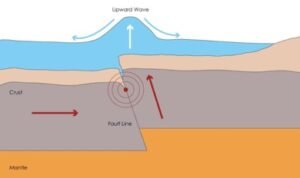
Meaning and Definition
-
A tsunami is a sequence of waves brought on by an abrupt and significant shift in the ocean.
-
The phrase originated in Japanese:
-
“Tsu” signifies harbour
-
“Nami” means wave
-
Tsunami Causes
-
Large earthquakes that occur beneath or close to the ocean floor (about 80% of tsunamis)
-
Other reasons are as follows:
-
Landslides
-
Activity of volcanoes
-
Specific meteorological phenomena
-
Impacts of meteorites
-
-
Not every earthquake causes a tsunami; they must be:
-
Powerful (at least 6.5 magnitude)
-
Shallow (less than 70 kilometres below the surface)
-
Cause the seafloor to move vertically
-
Features of Tsunami
-
Waves radiate from the source in all directions
-
Cross:
-
Rivers
-
Bays
-
Sounds
-
Islands
-
Ocean basins
-
-
Although the waves in the deep ocean are not very high, they move quickly
-
Wave height near shore:
-
Rises with ocean depth decline
-
Height and Speed
-
Able to travel in deep waters at up to 950 km/h (similar to jet planes)
-
The maximum wave height is 30 meters (98 feet)
-
In shallow waters:
-
Slow down
-
Rise
-
Warning Indications
-
The approaching wave trough is indicated by the abrupt retreat of coastal water
-
In the deep ocean, tsunami waves are difficult to detect
-
Can cause destructive damage close to shore
सुनामी समुद्र:
सुनामी के बारे में
अर्थ और परिभाषा
-
सुनामी समुद्र में अचानक और महत्वपूर्ण परिवर्तन के कारण उत्पन्न होने वाली लहरों की एक श्रृंखला होती है।
-
यह शब्द जापानी भाषा से आया है:
-
“त्सु” का अर्थ है बंदरगाह
-
“नामी” का अर्थ है लहर
-
सुनामी के कारण
-
बड़े भूकंप जो समुद्र तल के नीचे या उसके निकट आते हैं (लगभग 80% सुनामी)
-
अन्य कारण इस प्रकार हैं:
-
भूस्खलन
-
ज्वालामुखी की गतिविधि
-
विशेष मौसमीय घटनाएँ
-
उल्कापिंडों का प्रभाव
-
-
हर भूकंप सुनामी का कारण नहीं बनता; इसके लिए यह आवश्यक है कि वह:
-
शक्तिशाली हो (कम से कम 6.5 तीव्रता)
-
उथले स्तर पर हो (सतह से 70 किलोमीटर से कम गहराई पर)
-
समुद्र तल को ऊर्ध्वाधर रूप से स्थानांतरित करे
-
सुनामी की विशेषताएँ
-
लहरें स्रोत से सभी दिशाओं में फैलती हैं
-
ये पार कर सकती हैं:
-
नदियाँ
-
खाड़ियाँ
-
समुद्री जलधाराएँ
-
द्वीप
-
महासागरीय क्षेत्र
-
-
गहरे समुद्र में लहरें बहुत ऊँची नहीं होतीं, लेकिन तेज़ गति से चलती हैं
-
तट के पास लहरों की ऊँचाई:
-
समुद्र की गहराई में कमी के साथ बढ़ती है
-
ऊँचाई और गति
-
गहरे पानी में ये लहरें 950 किमी/घंटा तक की गति से चल सकती हैं (जेट विमान जैसी गति)
-
अधिकतम लहर की ऊँचाई 30 मीटर (98 फीट) हो सकती है
-
उथले पानी में:
-
धीमी हो जाती हैं
-
ऊँची उठती हैं
-
चेतावनी के संकेत
-
तटीय जल का अचानक पीछे हटना लहर के गर्त के आगमन को दर्शाता है
-
गहरे समुद्र में सुनामी की लहरों का पता लगाना कठिन होता है
-
किनारे के पास गंभीर विनाश का कारण बन सकती हैं |