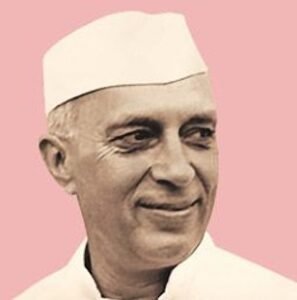
On 27th May 2025, the Prime Minister paid homage to India’s first Prime Minister, Pandit Jawaharlal Nehru—who died on 27th May 1964 and is remembered as the Architect of Modern India.
Early Life and Education:
Jawaharlal Nehru was born on 14 November 1889 in Allahabad.
He belonged to an affluent and Kashmiri Pandit family.
His father, Motilal Nehru, was a Congress President twice.
Nehru studied at Harrow School in England.
He graduated from Trinity College, Cambridge in Natural Sciences.
He studied law at Inner Temple, London.
Upon return, he practiced law at the Allahabad High Court briefly.
Role in the Freedom Struggle:
Nehru participated in the Non-Cooperation Movement (1920–22).
He was the provincial secretary of the Congress in United Provinces.
He was jailed during the Salt Satyagraha in 1930.
He was the second Satyagrahi in the Individual Satyagraha of 1940.
In 1942, he moved the Quit India resolution and was arrested.
In 1945–46, he helped defend INA soldiers during court trials.
Leadership in Congress:
He became Congress President in the 1929 Lahore Session.
The Purna Swaraj resolution was passed under his leadership.
In 1936, at Lucknow Session, he promoted socialism in Congress.
He chaired the 1937 Faizpur Session held in a rural area.
Interim Government & Prime Ministership:
In 1946, Nehru became Prime Minister of the Interim Government.
On 15 August 1947, he became India’s first Prime Minister.
He served until his death in 1964 as Prime Minister.
Policies and Contributions:
He advocated a mixed economy with a strong public sector.
He focused on heavy industries like steel and iron.
Institutions like IITs and AIIMS were established under him.
Land reforms aimed at abolishing zamindari and redistribution.
He led India’s non-alignment during the Cold War.
He handled the integration of Hyderabad (1948) and Goa (1961).
Literary Contributions:
He authored The Discovery of India in jail.
His autobiography is titled Toward Freedom, also known as An Autobiography.
He also wrote Glimpses of World History and Letters to Daughter.
Awards and Honours:
He received the Bharat Ratna in 1955.
He was awarded doctorates by Columbia and Mysore University.
He posthumously received the World Peace Council Prize in 1970.
Death and Legacy:
Nehru died on 27 May 1964.
His birthday, 14 November, is celebrated as Children’s Day.
He is called the architect of modern India.
पंडित जवाहरलाल नेहरू
27 मई 2025 को प्रधानमंत्री ने भारत के प्रथम प्रधानमंत्री पंडित जवाहरलाल नेहरू को श्रद्धांजलि अर्पित की, जिनकी मृत्यु 27 मई 1964 को हुई थी और उन्हें आधुनिक भारत के निर्माता के रूप में याद किया जाता है।
प्रारंभिक जीवन एवं शिक्षा:
जवाहरलाल नेहरू का जन्म 14 नवंबर 1889 को इलाहाबाद में हुआ था।
वे एक समृद्ध और कश्मीरी पंडित परिवार से थे।
उनके पिता मोतीलाल नेहरू, कांग्रेस अध्यक्ष रहे थे।
नेहरू ने स्कूली शिक्षा हैरो स्कूल से प्राप्त की।
उन्होंने ट्रिनिटी कॉलेज, कैम्ब्रिज से स्नातक किया।
उन्होंने इनर टेम्पल, लंदन से कानून की पढ़ाई की।
भारत लौटकर कुछ समय इलाहाबाद हाईकोर्ट में वकालत की।
स्वतंत्रता आंदोलन में भूमिका:
नेहरू ने 1920-22 के असहयोग आंदोलन में भाग लिया।
वे यूनाइटेड प्रोविन्स कांग्रेस के सचिव बने।
उन्होंने 1930 के नमक सत्याग्रह में जेल काटी।
1940 में वे द्वितीय सत्याग्रही और व्यक्तिगत सत्याग्रह में शामिल हुए।
1942 में उन्होंने Quit India प्रस्ताव रखा और गिरफ्तार हुए।
1945-46 में उन्होंने INA सैनिकों की वकालत की।
कांग्रेस में नेतृत्व:
वे 1929 के लाहौर अधिवेशन में अध्यक्ष बने।
इस अधिवेशन में पूर्ण स्वराज प्रस्ताव पारित हुआ।
1936 के लखनऊ अधिवेशन में समाजवाद का समर्थन किया।
1937 के फैजपुर अधिवेशन की उन्होंने अध्यक्षता की।
अंतरिम सरकार और प्रधानमंत्री पद:
1946 में वे अंतरिम सरकार के प्रधानमंत्री बने।
15 अगस्त 1947 को वे भारत के पहले प्रधानमंत्री बने।
1964 में निधन तक उन्होंने प्रधानमंत्री का कार्यभार संभाला।
नीतियाँ और योगदान:
उन्होंने मिश्रित अर्थव्यवस्था का समर्थन किया।
उन्होंने भारी उद्योगों को प्राथमिकता दी।
उनके कार्यकाल में IITs, AIIMS की स्थापना हुई।
उन्होंने भूमि सुधार और जमींदारी प्रथा के उन्मूलन का समर्थन किया।
उन्होंने गुटनिरपेक्षता को विदेश नीति में अपनाया।
उन्होंने 1948 में हैदराबाद, 1961 में गोवा का भारत में विलय कराया।
साहित्यिक योगदान:
उन्होंने The Discovery of India पुस्तक लिखी।
उन्होंने An Autobiography, Toward Freedom नाम से आत्मकथा लिखी।
उन्होंने Glimpses of World History और Letters from a Father लिखीं।
पुरस्कार और सम्मान:
उन्हें 1955 में भारत रत्न मिला।
उन्हें कोलंबिया विश्वविद्यालय और मैसूर विश्वविद्यालय से डॉक्टरेट मिली।
उन्हें मरणोपरांत 1970 में World Peace Council Prize मिला।
मृत्यु और विरासत:
उनका निधन 27 मई 1964 को हुआ।
उनका जन्मदिन बाल दिवस के रूप में 14 नवंबर को मनाया जाता है।
वे आधुनिक भारत के निर्माता कहे जाते हैं।