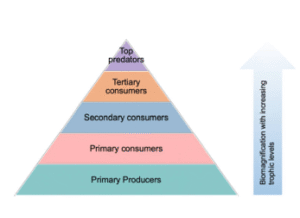
Biomagnification and Bioaccumulation – Overview
-
Both involve build-up of harmful substances in living beings
-
Biomagnification – concentration of toxins increases as they move up the food chain
-
Bioaccumulation – toxins build up within a single organism over time
-
Both harm wildlife, humans, and ecosystems
-
Need measures such as:
-
Stricter regulations
-
Waste management
-
Bioremediation
-
Habitat conservation
-
Biomagnification – Definition & Features
-
Toxins (pesticides, heavy metals, chemicals) increase at higher food chain levels
-
Apex predators most affected
-
Transfer of contaminants occurs through multiple organisms
-
Most severe at higher trophic levels
Biomagnification – Effects
-
On Wildlife
-
-
Reproductive failure, reduced fertility
-
Behavioural changes (foraging, predator avoidance)
-
Weakened immunity, higher disease risks
-
Species decline or local extinction possible
-
-
On Humans
-
-
Mercury causes neurological issues (infants/children most vulnerable)
-
Developmental delays, cognitive impairment
-
Risk of cardiovascular diseases
-
Carcinogenic substances increase cancer risk
-
Bioaccumulation – Definition
-
Organisms absorb chemicals from air, water, soil, or diet
-
When intake is greater than excretion, toxins build up inside body
-
Includes both essential nutrients and harmful pollutants
-
Bioconcentration – specific to aquatic organisms (uptake via skin/gills from water, not diet)
Bioaccumulation – Features
-
Environmental persistence – chemicals that resist degradation accumulate more
-
Lipophilic nature – fat-loving substances stored in tissues and sediments
-
Duration of exposure – longer exposure leads to higher accumulation
-
Metabolic rate – large, long-lived species bioaccumulate more
-
Chemical transformation – easily transformed substances excreted faster
-
Species variation – accumulation differs across aquatic and terrestrial organisms
Causes of Bioaccumulation
-
Environmental pollution
-
-
Industrial emissions
-
Pesticides
-
Fertilizers
-
Runoff
-
-
Contaminant persistence
-
-
Heavy metals (mercury, lead, cadmium)
-
Organic compounds (PCBs)
-
-
Biological factors
-
-
Slower metabolism
-
Predatory diets
-
-
Bioavailability
-
-
Easily dissolving or absorbable contaminants accumulate more
-
Biomagnification – Process
-
Contaminants enter ecosystems (industrial runoff, agriculture, vehicle emissions)
-
Primary producers (plants, algae, phytoplankton) absorb toxins
-
Herbivores consume contaminated producers
-
Predators eat herbivores → higher toxin concentration
-
Slow metabolism in predators → less toxin elimination
-
Highest toxin levels in top predators
Examples of Biomagnification & Bioaccumulation
-
Mercury in fish – tuna, sharks, and eagles accumulate highest levels
-
DDT in birds of prey – leads to thin eggshells, population decline
-
PCBs in marine mammals – seals, whales suffer reproductive and immune issues
-
Lead in predatory birds – poisoning from contaminated prey
-
Cadmium in terrestrial chains – damages kidneys in higher animals
Effects of Bioaccumulation & Biomagnification
-
Ecological imbalances – predator-prey disruption, biodiversity loss
-
Human health risks – neurological disorders, chronic diseases, developmental issues
-
Wildlife impact – reproductive failure, deformities, immune suppression
-
Endangered species – pushed closer to extinction
-
Environmental persistence – long-term damage even after pollution source stops
Difference – Biomagnification vs Bioaccumulation
-
Biomagnification
-
-
Increase in toxin concentration up the food chain
-
Across multiple trophic levels
-
Transfer between organisms
-
Occurs through food chain progression
-
Example: pesticides in birds of prey
-
-
Bioaccumulation
-
-
Toxin build-up within a single organism over time
-
Influenced by exposure, metabolism, and persistence
-
Accumulation faster than elimination
-
Occurs during organism’s lifetime
-
Example: mercury in fish
-
जैव आवर्धन और जैव संचयन
जैव आवर्धन (Biomagnification) और जैव संचयन (Bioaccumulation) – अवलोकन
-
दोनों में जीवों में हानिकारक पदार्थों का जमाव होता है
-
जैव आवर्धन – खाद्य श्रृंखला में ऊपर जाते समय विषाक्त पदार्थों की सांद्रता बढ़ती है
-
जैव संचयन – एक ही जीव में समय के साथ विषाक्त पदार्थों का जमाव होता है
-
दोनों ही वन्यजीवों, मनुष्यों और पारिस्थितिक तंत्र को नुकसान पहुँचाते हैं
-
रोकथाम के उपाय
-
कड़े नियम
-
अपशिष्ट प्रबंधन
-
जैव उपचार (Bioremediation)
-
आवास संरक्षण
-
जैव आवर्धन – परिभाषा और विशेषताएँ
-
कीटनाशक, भारी धातुएँ, रसायन उच्च खाद्य श्रृंखला स्तरों पर बढ़ते हैं
-
शीर्ष शिकारी (Apex predators) सबसे अधिक प्रभावित होते हैं
-
कई जीवों के माध्यम से संदूषकों का स्थानांतरण होता है
-
उच्च ट्रॉफिक स्तरों पर सबसे गंभीर प्रभाव
जैव आवर्धन – प्रभाव
-
वन्यजीवों पर
-
-
प्रजनन विफलता, प्रजनन क्षमता में कमी
-
व्यवहार में परिवर्तन (खोज, शिकारियों से बचाव)
-
प्रतिरक्षा कमजोर होना, बीमारियों का खतरा बढ़ना
-
प्रजातियों का पतन या स्थानीय विलुप्ति संभव
-
-
मनुष्यों पर
-
-
पारा (Mercury) से तंत्रिका संबंधी समस्याएँ (शिशु/बच्चे सबसे संवेदनशील)
-
विकास में विलंब, संज्ञानात्मक हानि
-
हृदय रोगों का जोखिम
-
कैंसरकारी पदार्थों से कैंसर का खतरा बढ़ता है
-
जैव संचयन – परिभाषा
-
जीव वायु, जल, मिट्टी या भोजन से रसायन अवशोषित करते हैं
-
जब ग्रहण की मात्रा उत्सर्जन से अधिक होती है, तो शरीर में विषाक्त पदार्थ जमा हो जाते हैं
-
इसमें आवश्यक पोषक तत्व और हानिकारक प्रदूषक दोनों शामिल हैं
-
जैव संकेन्द्रण (Bioconcentration) – विशेष रूप से जलीय जीवों में (त्वचा/गलफड़ों से पानी द्वारा अवशोषण, भोजन द्वारा नहीं)
जैव संचयन – विशेषताएँ
-
पर्यावरणीय स्थायित्व – जो रसायन विघटन से बचते हैं, वे अधिक जमा होते हैं
-
वसा प्रियता – वसा ऊतकों और अवसादों में संग्रहित होते हैं
-
संपर्क की अवधि – जितनी लंबी अवधि, उतना अधिक संचयन
-
चयापचय दर – बड़े और लंबे समय तक जीवित रहने वाले जीव अधिक संचय करते हैं
-
रासायनिक परिवर्तन – जो पदार्थ आसानी से परिवर्तित होते हैं, वे तेजी से उत्सर्जित होते हैं
-
प्रजातीय भिन्नता – जलीय और स्थलीय जीवों में संचयन अलग-अलग होता है
जैव संचयन के कारण
-
पर्यावरण प्रदूषण
-
-
औद्योगिक उत्सर्जन
-
कीटनाशक
-
उर्वरक
-
बहाव
-
-
संदूषक स्थायित्व
-
-
भारी धातुएँ (पारा, सीसा, कैडमियम)
-
कार्बनिक यौगिक (PCBs)
-
-
जैविक कारक
-
-
धीमा चयापचय
-
शिकारी भोजन
-
-
जैव उपलब्धता
-
-
जो संदूषक आसानी से घुल जाते हैं या अवशोषित हो जाते हैं, वे अधिक जमा होते हैं
-
जैव आवर्धन – प्रक्रिया
-
प्रदूषक पारिस्थितिकी तंत्र में प्रवेश करते हैं (औद्योगिक बहाव, कृषि, वाहन उत्सर्जन)
-
प्राथमिक उत्पादक (पौधे, शैवाल, फाइटोप्लवकटन) विष अवशोषित करते हैं
-
शाकाहारी जीव दूषित उत्पादकों को खाते हैं
-
शिकारी शाकाहारियों को खाते हैं → विष की अधिक सांद्रता
-
शिकारियों का धीमा चयापचय → कम उत्सर्जन
-
शीर्ष शिकारी में विष का सबसे उच्च स्तर
जैव आवर्धन और जैव संचयन के उदाहरण
-
मछलियों में पारा – टूना, शार्क और गरुड़ में सबसे अधिक स्तर
-
पक्षियों में DDT – अंडे के छिलके पतले होना, जनसंख्या में गिरावट
-
समुद्री स्तनधारियों में PCBs – सील, व्हेल में प्रजनन और प्रतिरक्षा समस्याएँ
-
शिकारी पक्षियों में सीसा – दूषित शिकार से विषाक्तता
-
स्थलीय श्रृंखलाओं में कैडमियम – उच्च जीवों में गुर्दे को नुकसान
जैव संचयन और जैव आवर्धन के प्रभाव
-
पारिस्थितिक असंतुलन – शिकारी-शिकार संबंध बिगड़ना, जैव विविधता का नुकसान
-
मानव स्वास्थ्य पर प्रभाव – तंत्रिका विकार, दीर्घकालिक रोग, विकास संबंधी समस्याएँ
-
वन्यजीव प्रभाव – प्रजनन विफलता, विकृतियाँ, प्रतिरक्षा दमन
-
संकटग्रस्त प्रजातियाँ – विलुप्ति के और करीब धकेली जाती हैं
-
पर्यावरणीय स्थायित्व – प्रदूषण स्रोत बंद होने के बाद भी लंबे समय तक नुकसान
अंतर – जैव आवर्धन बनाम जैव संचयन
-
जैव आवर्धन
-
-
खाद्य श्रृंखला में ऊपर जाते समय विष की सांद्रता बढ़ती है
-
कई ट्रॉफिक स्तरों में
-
जीवों के बीच स्थानांतरण
-
खाद्य श्रृंखला की प्रगति से होता है
-
उदाहरण: पक्षियों में कीटनाशक
-
-
जैव संचयन
-
-
एक ही जीव में समय के साथ विष का जमाव
-
संपर्क, चयापचय और स्थायित्व से प्रभावित
-
संचयन उत्सर्जन से तेज होता है
-
जीव के जीवनकाल में होता है
-
उदाहरण: मछलियों में पारा
-