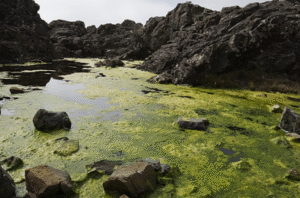
Algal Blooms
-
Refers to the phytoplankton’s exponential growth in bodies of water
-
Occur when there is an abundance of nutrients and sunlight, which speeds up reproduction
-
The presence of dense phytoplankton alters the colour of the water
The Red Tide
-
A kind of harmful algal bloom (HAB) brought on by microorganisms that produce toxins, most frequently dinoflagellates
-
Damages marine life and discolours water by:
-
Depletion of oxygen
-
The buildup of toxins in the food chain
-
Reasons for Algal Blooms
-
Flux of nutrients
-
-
Monsoons and coastal upwelling (nutrient-rich water rising to the surface) increase the availability of nutrients
-
-
Eutrophication
-
-
When there are too many nutrients present, algae and cyanobacteria grow more quickly
-
-
Temperature
-
-
More likely to happen in the summer or autumn, but it can happen at any time of year
-
-
Turbidity
-
-
More light penetration from low turbidity promotes photosynthesis and the growth of algae
-
-
Bloom formation is also influenced by:
-
-
Organic matter
-
Suspended particles
-
Hotspots for Algal Blooms
-
Areas affected by:
-
-
Coastal upwelling
-
Eutrophication
-
Nutrient flux
-
-
Prevalent in coastal waters that are:
-
-
Tropical
-
Subtropical
-
Algal Blooms’ Effect on the Environment
-
Hypoxia, or oxygen deprivation
-
-
Algal decomposition uses up oxygen, resulting in dead zones that are unsuitable for marine life
-
-
Toxicity
-
-
Fish, shellfish, and humans are poisoned by the neurotoxins and hepatotoxins produced by certain algae
-
-
Food Chain Upheaval
-
-
An imbalance in the ecosystem results from harmful blooms outcompeting beneficial phytoplankton
-
-
Economic Losses
-
-
Fisheries are impacted by fish kills
-
Beach closures, discoloured water, and offensive odours all contribute to a drop in tourism
-
-
Damage to Coral Reefs
-
-
Blooms suffocate and bleach coral by blocking sunlight, which degrades reef ecosystems
-
Actions to Lower Algal Blooms in Indian Coastal Waters
-
Improve the Circulation of Ocean Water
-
-
Artificial upwelling is one of the aeration techniques used to avoid stagnant water
-
-
Control Coastal Runoff
-
-
Harvesting rainwater
-
Managing stormwater to lessen runoff that is rich in nutrients
-
-
Limit the Entry of Nitrogen and Phosphorus
-
-
Enforcing stringent wastewater treatment for industrial and agricultural discharge
-
-
Encourage Sustainable Fishing and Aquaculture
-
-
Avoiding overfeeding aquaculture farms
-
Reducing organic pollution through proper waste disposal
-
-
Restore Seagrass Beds and Mangroves
-
-
These natural filters absorb excess nutrients
-
-
Track and Forecast Blooms
-
-
For real-time tracking, use bio-optical algorithms and satellite remote sensing
-
-
Public Awareness & Policy Action
-
-
Inform industries and coastal communities about HAB prevention and nutrient pollution control
-
शैवाल प्रस्फोट (Algal Blooms);
-
जल निकायों में फाइटोप्लांकटन की तीव्र वृद्धि को दर्शाता है
-
जब पोषक तत्वों और धूप की प्रचुरता होती है, तो यह प्रजनन को तेज कर देता है
-
घने फाइटोप्लांकटन की उपस्थिति जल का रंग बदल देती है
लाल ज्वार (Red Tide)
-
एक प्रकार का हानिकारक शैवाल प्रस्फोट (HAB) जो विष उत्पन्न करने वाले सूक्ष्मजीवों, विशेष रूप से डाइनोफ्लाजेलेट्स द्वारा होता है
-
समुद्री जीवन को नुकसान पहुंचाता है और जल का रंग बदलता है:
-
ऑक्सीजन की कमी
-
खाद्य श्रृंखला में विषों का संचय
-
शैवाल प्रस्फोट के कारण
-
पोषक तत्वों का प्रवाह
-
-
मानसून और तटीय अपवेलिंग (जो सतह पर पोषक तत्वों से भरपूर पानी लाते हैं) पोषक तत्वों की उपलब्धता को बढ़ाते हैं
-
-
यूटीट्रोफिकेशन (Eutrophication)
-
-
जब अत्यधिक पोषक तत्व मौजूद होते हैं, तो शैवाल और सायनोबैक्टीरिया तेजी से बढ़ते हैं
-
-
तापमान
-
-
गर्मी या पतझड़ में अधिक होने की संभावना होती है, लेकिन यह साल के किसी भी समय हो सकता है
-
-
गंदलापन (Turbidity)
-
-
कम गंदलापन से अधिक प्रकाश प्रवेश होता है, जिससे प्रकाश संश्लेषण और शैवाल की वृद्धि को बढ़ावा मिलता है
-
-
प्रस्फोट निर्माण को प्रभावित करने वाले अन्य तत्व:
-
-
कार्बनिक पदार्थ
-
निलंबित कण
-
शैवाल प्रस्फोट के हॉटस्पॉट
-
वे क्षेत्र जो प्रभावित होते हैं:
-
-
तटीय अपवेलिंग
-
यूटीट्रोफिकेशन
-
पोषक तत्वों का प्रवाह
-
-
ये आम तौर पर उन तटीय जल क्षेत्रों में होते हैं जो:
-
-
उष्णकटिबंधीय
-
उपोष्णकटिबंधीय होते हैं
-
शैवाल प्रस्फोट का पर्यावरण पर प्रभाव
-
हाइपॉक्सिया या ऑक्सीजन की कमी
-
-
शैवाल विघटन ऑक्सीजन का उपभोग करता है, जिससे “डेड ज़ोन” बनते हैं जो समुद्री जीवन के लिए अनुपयुक्त होते हैं
-
-
विषाक्तता
-
-
कुछ शैवाल द्वारा उत्पन्न न्यूरोटॉक्सिन और हेपाटोटॉक्सिन मछलियों, शंखों और मनुष्यों को विषैला बनाते हैं
-
-
खाद्य श्रृंखला में असंतुलन
-
-
हानिकारक प्रस्फोट लाभदायक फाइटोप्लांकटन को पीछे छोड़ देते हैं, जिससे पारिस्थितिकी तंत्र में असंतुलन होता है
-
-
आर्थिक नुकसान
-
-
मछलियों की मृत्यु से मत्स्य पालन प्रभावित होता है
-
समुद्र तटों का बंद होना, पानी का रंग बदलना और दुर्गंध पर्यटन को कम कर देते हैं
-
-
मूंगा भित्तियों को नुकसान
-
-
शैवाल प्रस्फोट प्रकाश को अवरुद्ध करके मूंगों को दमघोंटू और विरंजित कर देते हैं, जिससे रीफ पारिस्थितिकी तंत्र खराब हो जाते हैं
-
भारतीय तटीय जल में शैवाल प्रस्फोट को कम करने के उपाय
-
सागरीय जल परिसंचरण को बेहतर बनाना
-
-
कृत्रिम अपवेलिंग सहित वातन तकनीकों का उपयोग कर ठहरा हुआ पानी रोका जाए
-
-
तटीय अपवाह पर नियंत्रण
-
-
वर्षा जल संचयन
-
पोषक तत्वों से भरपूर अपवाह को कम करने के लिए तूफानी जल का प्रबंधन
-
-
नाइट्रोजन और फॉस्फोरस के प्रवेश को सीमित करना
-
-
औद्योगिक और कृषि अपशिष्ट के लिए सख्त अपशिष्ट जल उपचार लागू करना
-
-
सतत मत्स्य पालन और जलीय कृषि को प्रोत्साहित करना
-
-
जलीय कृषि फार्मों में अति-भोजन से बचना
-
उचित अपशिष्ट निपटान के माध्यम से जैविक प्रदूषण को कम करना
-
-
सीग्रास बेड और मैंग्रोव की पुनर्स्थापना
-
-
ये प्राकृतिक फिल्टर अतिरिक्त पोषक तत्वों को अवशोषित करते हैं
-
-
प्रस्फोट का निगरानी और पूर्वानुमान
-
-
वास्तविक समय में निगरानी के लिए बायो-ऑप्टिकल एल्गोरिदम और उपग्रह रिमोट सेंसिंग का उपयोग करना
-
-
जन-जागरूकता और नीति क्रियान्वयन
-
-
उद्योगों और तटीय समुदायों को HAB की रोकथाम और पोषक तत्व प्रदूषण नियंत्रण के बारे में सूचित करना |
-