Why in News?
-
Launched in 2024–25 by the Government of India.
-
Aim: To make India self-reliant in the production of oilseeds and edible oils by the year 2030–31.
Key Objectives:
-
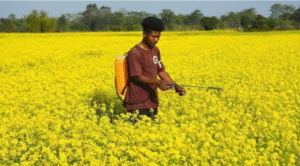
Increase domestic production of major oilseeds such as mustard, soybean, groundnut, sunflower, sesame, and others.
-
Promote research in high-yielding and climate-resilient varieties.
-
Encourage the use of modern agricultural practices and digital technologies.
-
Provide financial support and input subsidies to farmers.
-
Improve post-harvest infrastructure, processing facilities, and market linkages.
-
Expand coverage of crop insurance for oilseed farmers.
-
Enhance secondary oil extraction from sources like rice bran, cottonseed, and tree-borne oilseeds.
Implementation and Targets:
-
Duration: 2024–25 to 2030–31
-
Total Budget: ₹10,103 crore
-
Production Target: Increase oilseed output from 39 million tonnes to 69.7 million tonnes
-
Edible Oil Goal: Meet 72% of India’s projected domestic edible oil demand by 2030–31
Support Measures:
-
Launch of SATHI Portal to coordinate quality seed supply.
-
Higher Minimum Support Prices (MSP) and schemes like PM-AASHA to ensure fair returns to farmers.
-
Increase in import duties to protect domestic producers from cheap imports.
-
Focus on environmental sustainability and employment generation in rural areas.
Learning Corner:
Oilseeds Production in India:
-
India is one of the world’s largest producers of oilseeds but imports over 50% of its edible oil requirements.
-
Main oilseed crops: Groundnut, Soybean, Mustard/Rapeseed, Sunflower, Sesame, Linseed, Niger, Safflower, Castor.
-
Grown mostly in rain-fed regions, resulting in low productivity due to limited irrigation, poor soil fertility, and climate variability.
Key Government Schemes Supporting Oilseeds Sector:
-
National Mission on Edible Oils – Oilseeds (NMEO–Oilseeds):
-
Period: 2024–25 to 2030–31
-
Goal: Self-sufficiency in edible oils
-
Target: 69.7 million tonnes of oilseed production
-
Focus Areas:
-
High-yielding, climate-resilient seeds
-
Financial support and subsidies
-
Crop insurance
-
SATHI portal for seed supply
-
Improved storage, processing, and value addition
-
Use of both primary and secondary sources (e.g., cottonseed, rice bran)
-
-
National Food Security Mission – Oilseeds & Oil Palm (NFSM):
-
Promotes higher productivity and area under cultivation.
-
Offers support for seeds, inputs, training, and cluster-based demonstrations.
-
Price Support Scheme (PSS):
-
Operated under the PM-AASHA umbrella.
-
Government agencies procure oilseeds at MSP to protect farmers against price crashes.
-
Rashtriya Krishi Vikas Yojana (RKVY):
-
A flexible scheme that allows states to create tailored initiatives.
-
Funds programs including those that support oilseed cultivation based on local conditions.
Additional Points:
-
The mission is expected to reduce import dependence, save foreign exchange, and strengthen farmers’ income.
-
The promotion of secondary oil sources like rice bran and cottonseed ensures optimal resource utilization.
-
The use of digital tools and climate-smart agriculture will improve productivity and resilience to climate change.