Why in News?
-
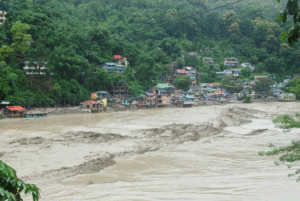
Flash floods have recently caused major disasters in different parts of India
-
In July 2025, Himachal Pradesh faced deadly floods
-
In July 2024, Wayanad in Kerala was hit
-
In June 2024, Ladakh experienced a severe flash flood
-
In October 2023, Sikkim was badly affected
-
These events have highlighted how dangerous and frequent flash floods have become
-
The rising number of such disasters shows a clear link to climate change and extreme rainfall
-
A new study by IIT Gandhinagar, published in Nature Hazards, brings fresh insights into why flash floods happen and which areas are most at risk
Flash Floods in India – Latest Situation
-
Flash floods now occur more often across the country
-
Every year, they kill thousands and damage key infrastructure like roads, bridges, homes, and farmland
-
The number of flash flood events rose from 132 in 2020 to 184 in 2022 (data from Union Jal Shakti Ministry)
-
These floods are sudden and usually linked to intense rainfall
-
Despite the growing risk, there is still a shortage of deep research to find and monitor the most flood-prone regions
-
This weakens efforts to build strong early warning systems and manage floods properly
New Study on Flash Floods in India
-
A recent study by IIT Gandhinagar, titled Drivers of flash floods in the Indian sub-continental river basins, helps fill this knowledge gap
-
It maps flood-prone sub-basins using detailed hydrological and geographical data
-
Key hotspots identified include:
-
Himalayas
-
Western Coast
-
Central India
-
-
In the Himalayas, steep slopes and high elevation make floods more likely
-
On the West Coast and in Central India, the land’s “flashiness” (how fast water runs off) is the main reason for floods
-
The study also reveals:
-
75% of flash floods happen due to both extreme rainfall and already saturated soil
-
Only 25% happen because of rainfall alone
-
-
Even areas that were not flood-prone before are now showing increased flood risks
Main Reasons Behind Flash Floods
-
Only 1 in 4 flash floods are caused solely by heavy rain
-
Most happen when:
-
The ground is already wet
-
Additional rainfall can’t soak into the soil
-
Water flows quickly across the surface, causing sudden floods
-
-
Only 23% of extreme rainfall events cause flash floods within six hours
-
Longer spells of low and high rainfall are more likely to trigger them
-
Regional differences are important:
-
West Coast and Central India: react quickly due to fast runoff
-
Himalayas: steep land increases flood speed
-
-
Even within major rivers like the Ganga, risk levels differ:
-
Southern Himalayan areas are more vulnerable
-
Central parts are less at risk
-
-
Terrain and local weather patterns play a huge role
How Climate Change Makes Things Worse
-
Rising global temperatures are increasing both the intensity and frequency of flash floods
-
As the atmosphere warms, it holds more moisture — around 7% more per 1°C increase
-
This causes heavier and longer rainfall
-
From 1981 to 2020, India saw:
-
Double the number of extreme rainfall events in pre-monsoon
-
56% increase during the monsoon
-
40% rise in post-monsoon
-
12.5% growth in winter rains
-
-
Over 75% of flash floods (1980–2018) happened during the monsoon season
-
Since 1995, flash floods have increased sharply in:
-
Brahmaputra basin
-
Ganga basin
-
Krishna basin
-
-
New areas are becoming wetter, even if they weren’t flood-prone before:
-
51% of these zones are seeing more rainfall
-
66.5% have higher streamflow
-
-
Some older flood-prone zones are actually seeing fewer wet hours, showing that climate risks are shifting
What Needs to Be Done – Region-Specific Solutions
-
The study calls for area-wise flood planning, not a one-size-fits-all approach
-
Solutions should match:
-
Local land type and height
-
Soil moisture levels
-
Rainfall pattern, not just amount
-
-
With tailored strategies, we can:
-
Build better early warning systems
-
Help people prepare
-
Make long-term safety plans
-
-
There is a strong need to:
-
Spot new flood-risk areas early
-
Build stronger and climate-ready infrastructure
-
-
With more unpredictable rain and rising temperatures, India also needs:
-
Smarter land use
-
Integrated flood management policies that work for different regions
-