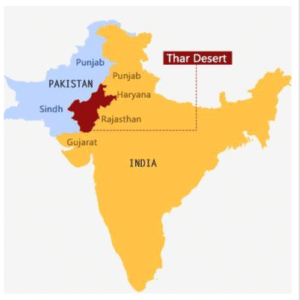
About the Thar Desert
-
Also known as: The Great Indian Desert
-
Location: Arid area of undulating sand hills on the Indian subcontinent
-
Type: One of the world’s biggest subtropical deserts
Location and Scope
-
Located in:
-
Northwest India
-
Eastern Pakistan
-
-
Covers:
-
India: Rajasthan, Gujarat, and Haryana
-
Pakistan: Sindh and Punjab provinces
-
-
Area:
-
More than 77,000 square miles
-
Roughly 200,000 square kilometres
-
-
Country-wise spread:
-
Approximately 85% in India
-
Around 15% in Pakistan
-
Geographical Boundaries
-
West: Plain of the Indus River
-
North and Northeast: Punjab Plain
-
Southeast: Aravalli Range
-
South: Rann of Kachchh
-
West (Boundary): Low-lying marshlands of the Luni River separate it from the Greater Rann of Kutch
Climate
-
Type: Arid and hot
-
Temperature:
-
Daytime: Often exceeds 50°C
-
Nighttime: Notable temperature drop
-
-
Rainfall:
-
Very low
-
Most areas receive less than 50 mm annually
-
Terrain and Landscape
-
Dominated by:
-
Rolling sand dunes, some reaching up to 200 meters high
-
Rocky outcroppings: Clusters of large rocks rising from the desert floor
-
Salt flats: Flat areas covered in salt
-
Level plains: Sparse vegetation and minimal soil cover
-
Mineral Resources
-
Rich in minerals, including:
-
One of India’s largest coal reserves
-
Gypsum
-
Limestone
-
Silica
-
Bauxite
-
Salt
-
थार मरुस्थल :
थार मरुस्थल के बारे में
-
अन्य नाम: ग्रेट इंडियन डेज़र्ट
-
स्थान: भारतीय उपमहाद्वीप में स्थित एक शुष्क क्षेत्र जिसमें लहराते रेत के टीले होते हैं
-
प्रकार: विश्व के सबसे बड़े उपोष्णकटिबंधीय रेगिस्तानों में से एक
स्थान और विस्तार
-
स्थित:
-
उत्तर पश्चिम भारत
-
पूर्वी पाकिस्तान
-
-
विस्तार:
-
भारत: राजस्थान, गुजरात और हरियाणा
-
पाकिस्तान: सिंध और पंजाब प्रांत
-
-
क्षेत्रफल:
-
77,000 वर्ग मील से अधिक
-
लगभग 200,000 वर्ग किलोमीटर
-
-
देश अनुसार वितरण:
-
लगभग 85% भारत में
-
करीब 15% पाकिस्तान में
-
भौगोलिक सीमाएं
-
पश्चिम: सिन्धु नदी का मैदान
-
उत्तर और उत्तर-पूर्व: पंजाब का मैदान
-
दक्षिण-पूर्व: अरावली पर्वत श्रृंखला
-
दक्षिण: कच्छ का रण
-
पश्चिम (सीमा): लूणी नदी के निम्न दलदली क्षेत्र इसे ग्रेटर रण ऑफ कच्छ से अलग करते हैं
जलवायु
-
प्रकार: शुष्क और गर्म
-
तापमान:
-
दिन में: अक्सर 50°C से ऊपर
-
रात में: तापमान में उल्लेखनीय गिरावट
-
-
वर्षा:
-
बहुत कम
-
अधिकांश क्षेत्रों में वार्षिक वर्षा 50 मिमी से भी कम
-
स्थलाकृति और परिदृश्य
-
प्रमुख रूप से:
-
लहराते रेत के टीले, जो 200 मीटर तक ऊँचे हो सकते हैं
-
“रॉकी आउटक्रॉपिंग्स”: रेगिस्तान की सतह से उभरे हुए बड़े चट्टानी समूह
-
“सॉल्ट फ्लैट्स”: नमक से ढकी समतल ज़मीन
-
समतल मैदान: बहुत कम वनस्पति और मिट्टी
-
खनिज संसाधन
-
खनिजों से भरपूर, जैसे:
-
भारत के सबसे बड़े कोयला भंडारों में से एक
-
जिप्सम
-
चूना पत्थर
-
सिलिका
-
बॉक्साइट
-
नमक
-