Skip links

New Caledonia

New Caledonia


France’s recent effort to establish a new political agreement for New Caledonia has been unsuccessful, increasing uncertainty about the territory’s future.
This follows years of unrest and three referendums held between 2018 and 2021, in which independence was rejected.
Geographical Location:
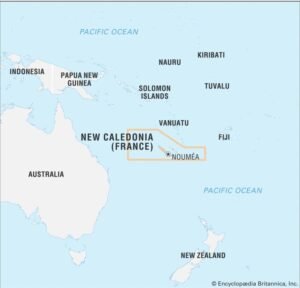
New Caledonia is a French overseas territory located in the southwestern Pacific Ocean.
It lies approximately 1,500 km east of Australia, making it strategically significant in the Indo-Pacific region.
The territory includes several island groups: Grande Terre, the Loyalty Islands (Ouvéa, Lifou, Tiga, Maré), Belep archipelago, Isle of Pines, and some remote islands.
Nouméa is the capital city, located on Grande Terre, the largest and most populated island.
It is situated on the Pacific Ring of Fire, which makes it vulnerable to seismic activity.
Historical Background:
The islands were originally inhabited by Kanaks, the indigenous Melanesian people of New Caledonia.
France seized the territory in 1853, establishing it as a penal colony for political prisoners.
After World War II, the Kanaks were granted French citizenship, gaining civil and political rights.
From the 1960s, migration from mainland France and other regions led to demographic shifts, reducing the Kanak majority.
This demographic change triggered the rise of pro-independence movements among the Kanak population.
The Matignon Agreements (1988) and Nouméa Accord (1998) were signed to ensure political stability and schedule independence referendums.
Three referendums were held (2018, 2020, 2021), and all voted to remain with France, though the 2021 vote was boycotted by pro-independence groups.
The Nouméa Accord granted greater autonomy, especially in local governance and cultural preservation.
Rivers and Climate:
The longest river in New Caledonia is the Diahot River, stretching approximately 100 km in length.
The region has a subtropical climate, moderated by the southeast trade winds.
The east coast receives significantly more rainfall than the drier west coast, due to orographic effects from the central mountain spine.
It is prone to cyclones during the wet season, especially from December to April.
Biodiversity and Ecology:
New Caledonia is a biodiversity hotspot, home to several endemic species of flora and fauna.
It hosts Amborella trichopoda, the only surviving member of the earliest known lineage of flowering plants.
The kagu, a flightless bird found only in New Caledonia, is an endemic and endangered species.
The territory’s coral lagoons are among the world’s largest and were declared a UNESCO World Heritage Site in 2008.
Its nickel-rich soils support unique vegetation but are under environmental threat from mining.
Political Status and Governance:
As a French overseas territory, New Caledonia remains under the sovereignty of France but has significant autonomy.
It has its own Congress, Customary Senate, and government, though defense, currency, and foreign affairs remain with France.
The Kanak customary system of governance is officially recognized alongside French civil law.
The local economy depends on nickel mining, tourism, and financial support from the French government.
Despite referendums favoring France, independence sentiments remain strong, especially among the Kanak youth.
Relevant Points:
New Caledonia holds 25% of the world’s nickel reserves, making it geopolitically important.
France uses New Caledonia as a strategic naval and air base in the Pacific.
The region is also a point of interest for Indo-Pacific geopolitics, particularly in light of China’s influence in the Pacific Islands.
India has participated in dialogues and maritime cooperation with France in the Pacific, including around New Caledonia.
न्यू कैलेडोनिया
न्यू कैलेडोनिया के लिए एक नया राजनीतिक समझौता स्थापित करने का फ़्रांस का हालिया प्रयास असफल रहा है, जिससे इस क्षेत्र के भविष्य के बारे में अनिश्चितता बढ़ गई है।
यह कई वर्षों की अशांति और 2018 से 2021 के बीच आयोजित तीन जनमत संग्रहों के बाद हुआ है, जिसमें स्वतंत्रता को अस्वीकार कर दिया गया था।
भौगोलिक स्थिति:
न्यू कैलेडोनिया एक फ्रांसीसी विदेशी क्षेत्र है जो दक्षिण-पश्चिमी प्रशांत महासागर में स्थित है।
यह ऑस्ट्रेलिया से लगभग 1,500 किलोमीटर पूर्व में स्थित है।
इसमें कई द्वीप समूह शामिल हैं: ग्रांदे टेरे, लॉयल्टी द्वीप (ऊवेआ, लिफू, टिगा, मारे), बेलेप द्वीप समूह, आइल ऑफ पाइन, और कुछ दूरस्थ द्वीप
नौमिया इस क्षेत्र की राजधानी है और ग्रांदे टेरे द्वीप पर स्थित है।
यह क्षेत्र प्रशांत रिंग ऑफ फायर में आता है, जिससे यह भूकंपीय गतिविधियों के प्रति संवेदनशील है।
ऐतिहासिक पृष्ठभूमि:
यह क्षेत्र मूलतः कनक जनजाति द्वारा बसाया गया था, जो यहां के मूल मेलानेशियन निवासी हैं।
फ्रांस ने इस क्षेत्र पर 1853 में अधिकार कर इसे एक दंड कॉलोनी बना दिया था।
द्वितीय विश्व युद्ध के बाद कनकों को फ्रांसीसी नागरिकता दी गई।
1960 के दशक में फ्रांस और अन्य क्षेत्रों से प्रवासन ने कनकों की बहुसंख्यता को कम कर दिया।
इस जनसंख्या परिवर्तन के कारण स्वतंत्रता आंदोलनों की शुरुआत हुई।
मैटिग्नन समझौता (1988) और नौमिया समझौता (1998) ने राजनीतिक स्थिरता और जनमत संग्रह का मार्ग प्रशस्त किया।
2018, 2020 और 2021 में तीन जनमत संग्रह कराए गए, जिनमें फ्रांस के साथ बने रहने के पक्ष में मत पड़े।
2021 का जनमत संग्रह स्वतंत्रता समर्थकों द्वारा बहिष्कृत किया गया था।
नौमिया समझौता ने क्षेत्र को व्यापक स्वायत्तता और संस्कृति संरक्षण की अनुमति दी।
नदियाँ और जलवायु:
न्यू कैलेडोनिया की सबसे लंबी नदी डियाहोट नदी है, जिसकी लंबाई लगभग 100 किलोमीटर है।
इस क्षेत्र की जलवायु उपोष्णकटिबंधीय है और इसे दक्षिण-पूर्वी व्यापारिक हवाएं प्रभावित करती हैं।
पूर्वी तट पर पश्चिमी तट की तुलना में अधिक वर्षा होती है।
क्षेत्र में दिसंबर से अप्रैल के बीच चक्री तूफानों की आशंका रहती है।
जैव विविधता और पारिस्थितिकी:
न्यू कैलेडोनिया को जैव विविधता हॉटस्पॉट माना जाता है, जहां कई स्थानिक प्रजातियां पाई जाती हैं।
यहां Amborella trichopoda पौधा पाया जाता है, जो फूलों वाले पौधों की सबसे पुरानी शाखा का अंतिम सदस्य है।
कागू पक्षी, जो उड़ नहीं सकता, केवल न्यू कैलेडोनिया में पाया जाता है और यह संकटग्रस्त प्रजाति है।
इसके कोरल लैगून दुनिया के सबसे बड़े लैगून में से एक हैं और इन्हें 2008 में यूनेस्को विश्व धरोहर घोषित किया गया।
यहां की मिट्टी में निकेल की भरपूर मात्रा है, लेकिन खनन से पर्यावरण पर असर पड़ रहा है।
राजनीतिक स्थिति और शासन:
न्यू कैलेडोनिया एक फ्रांसीसी विदेशी क्षेत्र है जो फ्रांस की संप्रभुता में आता है लेकिन इसे प्रशासनिक स्वायत्तता प्राप्त है।
इसके पास अपना कांग्रेस, परंपरागत सीनेट, और स्थानीय सरकार है।
रक्षा, मुद्रा और विदेश नीति अभी भी फ्रांस के नियंत्रण में है।
कनक परंपरागत शासन प्रणाली को फ्रांसीसी सिविल कानून के साथ मान्यता प्राप्त है।
यहां की अर्थव्यवस्था मुख्य रूप से निकेल खनन, पर्यटन और फ्रांसीसी सहायता पर निर्भर है।
भले ही जनमत संग्रह में फ्रांस के साथ रहने का निर्णय हुआ, लेकिन कनक युवाओं में स्वतंत्रता की भावना अब भी प्रबल है।
अतिरिक्त बिंदु:
न्यू कैलेडोनिया में दुनिया के निकेल भंडार का 25% हिस्सा है।
फ्रांस इस क्षेत्र का उपयोग प्रशांत क्षेत्र में नौसेना और वायुसेना अड्डे के रूप में करता है।
यह क्षेत्र भारत-प्रशांत क्षेत्र की रणनीति के तहत भी महत्वपूर्ण है, खासकर चीन के प्रभाव को देखते हुए।
भारत और फ्रांस ने इस क्षेत्र में सामुद्रिक सहयोग और संवाद को बढ़ावा दिया है।