Skip links

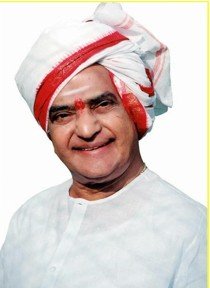
N. T. Rama Rao

N. T. Rama Rao

Prime Minister Narendra Modi paid homage to former Andhra Pradesh Chief Minister and legendary actor Nandamuri Taraka Rama Rao (NTR) on his birth anniversary.
Personal Background:
Nandamuri Taraka Rama Rao was born on 28 May 1923 in Nimmakuru, Andhra Pradesh.
He belonged to a Telugu-speaking agricultural family and pursued B.A. from Andhra-Christian College.
Before entering films or politics, he worked briefly as a sub-registrar.
Cinematic Career:
He was a legendary Telugu film actor, director, and producer, famously called NTR.
NTR portrayed mythological roles, especially of Lord Rama and Krishna, which earned him mass popularity.
His role in movies like ‘Mayabazar’, ‘Sri Krishna Pandaveeyam’, and ‘Dana Veera Sura Karna’ became iconic.
He received three National Film Awards and was honored with Padma Shri in 1968 for his contribution to Indian cinema.
Political Journey:
NTR founded the Telugu Desam Party (TDP) in 1982 on the slogan of “Telugu self-respect”.
Within nine months of forming TDP, he became the Chief Minister of Andhra Pradesh in 1983, breaking Congress dominance.
He served as CM for three terms: 1983–84, 1984–89, and 1994–95.
Governance and Reforms:
NTR introduced Midday Meal Scheme for school children to improve enrollment.
Launched Rs. 2 per kg rice scheme for the poor, which became a welfare model for other states.
Strongly advocated for women’s empowerment, and reservations for backward classes.
Reformed the administrative system by creating Mandal system (smaller units than taluks).
National Political Role:
NTR played a key role in forming the National Front in 1989, a coalition of non-Congress parties.
He emerged as a symbol of regional pride and federalism, challenging central authority.
NTR was respected for his stand on state autonomy and anti-corruption ideology.
Later Life and Legacy:
In 1995, he was removed from office in a political coup by his son-in-law Chandrababu Naidu.
NTR passed away on 18 January 1996, leaving behind a legacy of cinema, culture, and social justice politics.
Statues, institutions, and welfare schemes in Andhra Pradesh are named after him.
Relevant Points:
NTR’s life demonstrates the impact of cinema on Indian politics, especially in Southern India.
His governance model focused on populism, welfare, and regional identity, often compared to Dravidian leaders.
TDP under NTR was India’s first regional party to become national opposition in Lok Sabha.
His administrative innovation – the Mandal system – later inspired District Planning Committees.
एन. टी. रामा राव
प्रधानमंत्री नरेंद्र मोदी ने आंध्र प्रदेश के पूर्व मुख्यमंत्री और दिग्गज अभिनेता नंदमुरी तारक रामा राव (एनटीआर) को उनकी जयंती पर श्रद्धांजलि दी।
व्यक्तिगत पृष्ठभूमि:
नंदमूरी तारक रामाराव का जन्म 28 मई 1923 को निम्मकूरु (आंध्र प्रदेश) में हुआ था।
वह एक तेलुगु-भाषी कृषक परिवार से संबंध रखते थे और उन्होंने आंध्र क्रिश्चियन कॉलेज से स्नातक (B.A.) किया।
फिल्मों और राजनीति में आने से पहले उन्होंने थोड़े समय के लिए सब-रजिस्ट्रार के रूप में कार्य किया।
फिल्मी करियर:
NTR एक महान तेलुगु फिल्म अभिनेता, निर्देशक और निर्माता थे, जिन्हें लोकप्रिय रूप से “NTR” कहा जाता है।
उन्होंने विशेष रूप से भगवान राम और कृष्ण की पौराणिक भूमिकाएँ निभाईं, जिससे वे जनमानस में पूज्य हो गए।
उनकी प्रसिद्ध फिल्मों में ‘मायाबाजार’, ‘श्रीकृष्ण पांडवीयम’, ‘दाना वीरा शूर कर्ण’ प्रमुख हैं।
उन्हें तीन राष्ट्रीय फिल्म पुरस्कार और 1968 में पद्मश्री से सम्मानित किया गया।
राजनीतिक यात्रा:
NTR ने 1982 में “तेलुगु स्वाभिमान” के नारे के साथ तेलुगु देशम पार्टी (TDP) की स्थापना की।
पार्टी गठन के केवल 9 महीनों के भीतर वे 1983 में आंध्र प्रदेश के मुख्यमंत्री बने और कांग्रेस का वर्चस्व तोड़ा।
उन्होंने तीन बार मुख्यमंत्री पद संभाला: 1983–84, 1984–89, और 1994–95।
शासन व सुधार:
उन्होंने बच्चों के लिए मिड डे मील योजना प्रारंभ की, जिससे विद्यालयों में नामांकन बढ़ा।
गरीबों के लिए ₹2 प्रति किलो चावल योजना शुरू की, जो आगे चलकर कई राज्यों द्वारा अपनाई गई।
महिलाओं के सशक्तिकरण और पिछड़े वर्गों के आरक्षण पर विशेष जोर दिया।
उन्होंने प्रशासनिक व्यवस्था में सुधार कर मंडल प्रणाली की शुरुआत की।
राष्ट्रीय राजनीति में भूमिका:
उन्होंने 1989 में नेशनल फ्रंट के गठन में अहम भूमिका निभाई, जो गैर-कांग्रेसी दलों का गठबंधन था।
वे राज्यीय स्वायत्तता और भ्रष्टाचार विरोध के पक्षधर थे।
उन्होंने संघवाद और क्षेत्रीय अस्मिता को मज़बूती से आगे बढ़ाया।
अंतिम जीवन व विरासत:
1995 में उनके दामाद चंद्रबाबू नायडू ने पार्टी में आंतरिक राजनीतिक तख्तापलट कर उन्हें पद से हटा दिया।
NTR का 18 जनवरी 1996 को निधन हो गया।
उनके नाम पर आज भी प्रतिमाएँ, संस्थान और कई कल्याणकारी योजनाएँ चलाई जाती हैं।
महत्वपूर्ण तथ्य:
NTR का जीवन दक्षिण भारत में सिनेमा के राजनीति पर प्रभाव को दर्शाता है।
उनके शासन मॉडल में लोकलुभावन योजनाएं, कल्याणवाद और आंचलिक गर्व के तत्व प्रमुख थे।
TDP, NTR के नेतृत्व में, लोकसभा में पहली क्षेत्रीय पार्टी बनी जो राष्ट्रीय विपक्ष बनी।
उन्होंने जो मंडल प्रणाली लागू की, वह बाद में जिला योजना समितियों (District Planning Committees) का आधार बनी।